
Description
🧪 What It Is
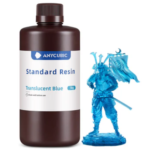
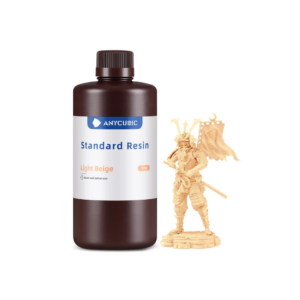
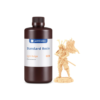
High Precision UV 405 nm 3D Printing Resin is a photopolymer resin formulated to cure under 405 nm ultraviolet light, which is the standard wavelength used in most consumer and professional LCD/DLP 3D printers (e.g., Anycubic, Elegoo, Creality, Phrozen, etc.).
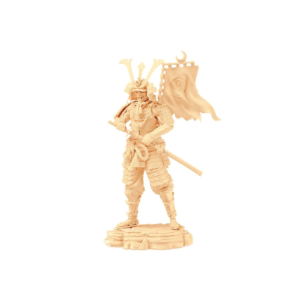
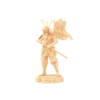
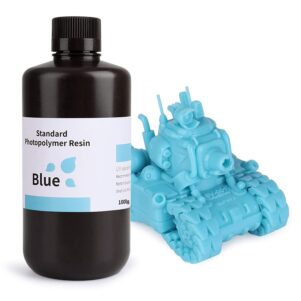
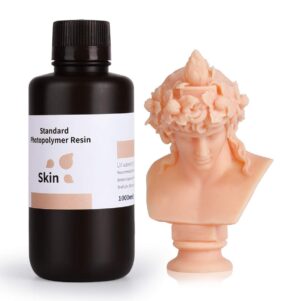
Instead of melting filament, your printer projects UV images layer by layer to solidify liquid resin into finished parts with excellent accuracy, smooth surface finish, and fine detail reproduction. This makes it ideal for miniatures, dental models, engineering prototypes, jewellery casting patterns, and artistic pieces.
🧩 Key Features
🔹 Ultra-High Detail
-
Excellent for fine details, sharp edges, and intricate features.
-
Suitable for small parts like miniatures, jewelry, engineering prototypes, and precision components.
🔹 Fast UV Curing
-
Formulated to cure quickly with 405 nm UV light, reducing print times and improving layer adhesion.
🔹 Low Viscosity
-
Resin flows easily and evenly, reducing bubbles and improving print consistency.
-
Helps with self-leveling during printing — important for reliability and quality.
🔹 Good Adhesion
-
Sticks well to the build plate to avoid print failures.
-
Release is easy after printing, simplifying post-processing.
🔹 Smooth Surface Finish
-
Produces models with minimal layer lines and high detail, requiring less sanding and post-finishing.
🔹 Wide Material Compatibility
-
Works with most 405 nm LCD/DLP resin 3D printers including:
-
Anycubic Photon Series
-
Elegoo Mars / Saturn
-
Creality Halot / LD / Resin
-
Phrozen Sonic Series
-
QIDI Tech resin printers
-
and many more
-
📊 Typical Specifications
| Specification | Typical Value |
|---|---|
| Curing Wavelength | 405 nm UV |
| Viscosity | ~150–300 cP (low viscosity for smooth flow) |
| Density | ~1.10–1.20 g/cm³ |
| Tensile Strength | ~40–60 MPa |
| Shore Hardness | ~80–90 HS |
| Elongation at Break | ~10–20% |
| Shrinkage After Cure | ~3–6% |
| Shelf Life | ~12–18 months (sealed, dark storage) |
Actual values vary by brand and formulation — translucent, clear, coloured, castable, flexible or engineering resins all have slightly different properties.
🖨️ How It Works (Step-by-Step)
-
Prepare Printer & Resin Vat
– Ensure the vat film is clean and leveled. Pour fresh resin into the vat to the appropriate level. -
Level Build Plate & Set Exposure
– Calibrate build plate height. Use recommended exposure times for your specific printer and resin. -
Print Layer by Layer
– The 405 nm UV light source cures each layer.
– The model grows upward from the build plate. -
Remove and Rinse
– After printing, carefully remove the part.
– Rinse in isopropyl alcohol (IPA) or ethanol to remove uncured resin. -
Final UV Post-Cure
– Use a UV curing station (or sunlight) to fully cure the resin for strength and stability.
📍 Safety & Handling
-
Always wear nitrile gloves and eye protection.
-
Work in a well-ventilated area.
-
Avoid direct skin contact — uncured resin can be irritating.
-
Store resin sealed, away from light and heat to maintain quality.
🏷️ Typical Applications
✔ Miniatures and figurines | ✔ Jewelry patterns
✔ Functional prototypes | ✔ Dental models
✔ Engineering parts | ✔ Concept models
✔ Transparent & coloured artistic prints
✔ High-resolution parts for casting workflows
Reviews
There are no reviews yet.